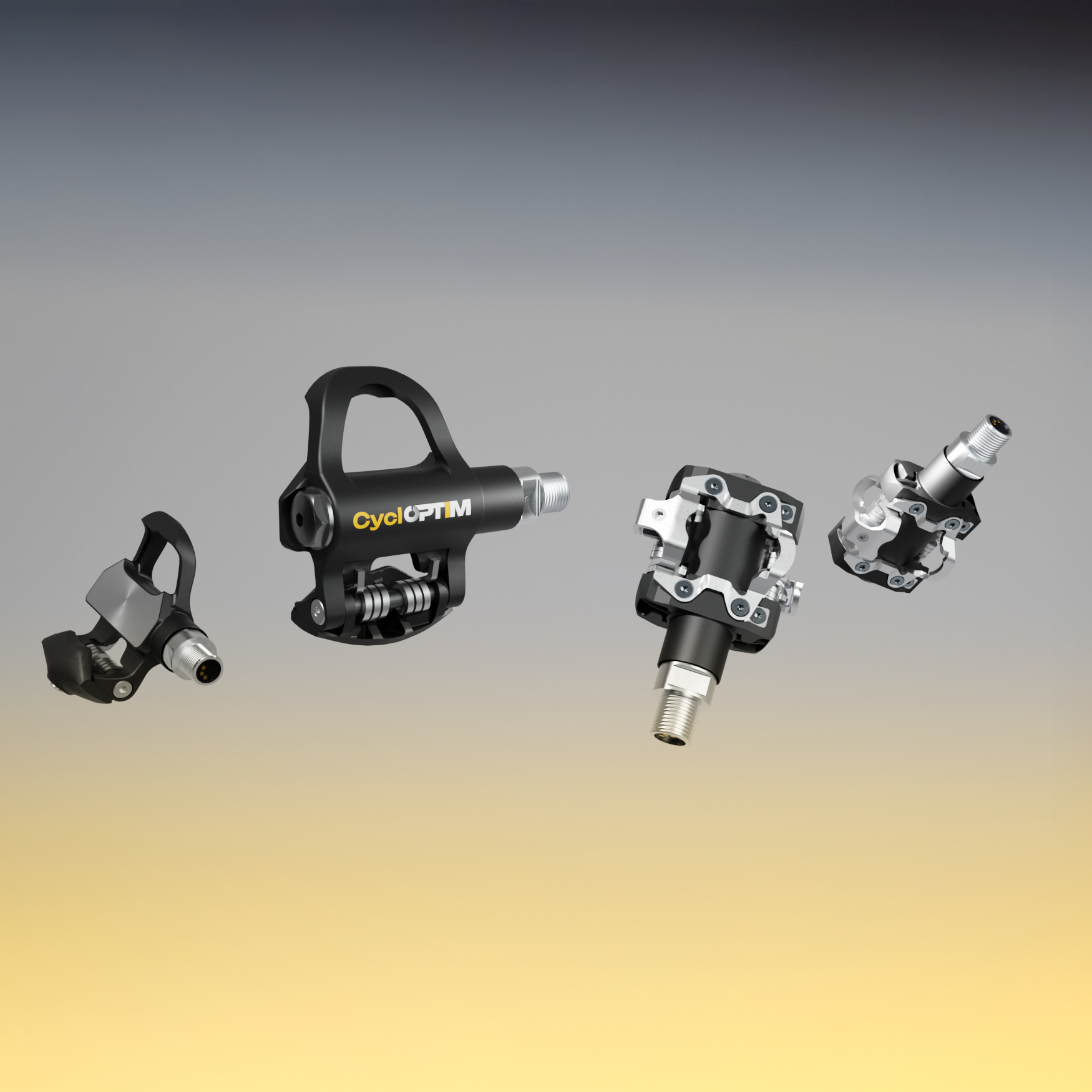
CyclOptim pedals are the result of years of research and development — built to deliver accurate, reliable power measurement, and above all, designed so the sensors can be swapped between road and MTB pedals.

This was the founding idea behind the project when it launched in 2019, and the first requirement we set ourselves.

Want to see what's under the handlebars? You've come to the right place!

Accuracy

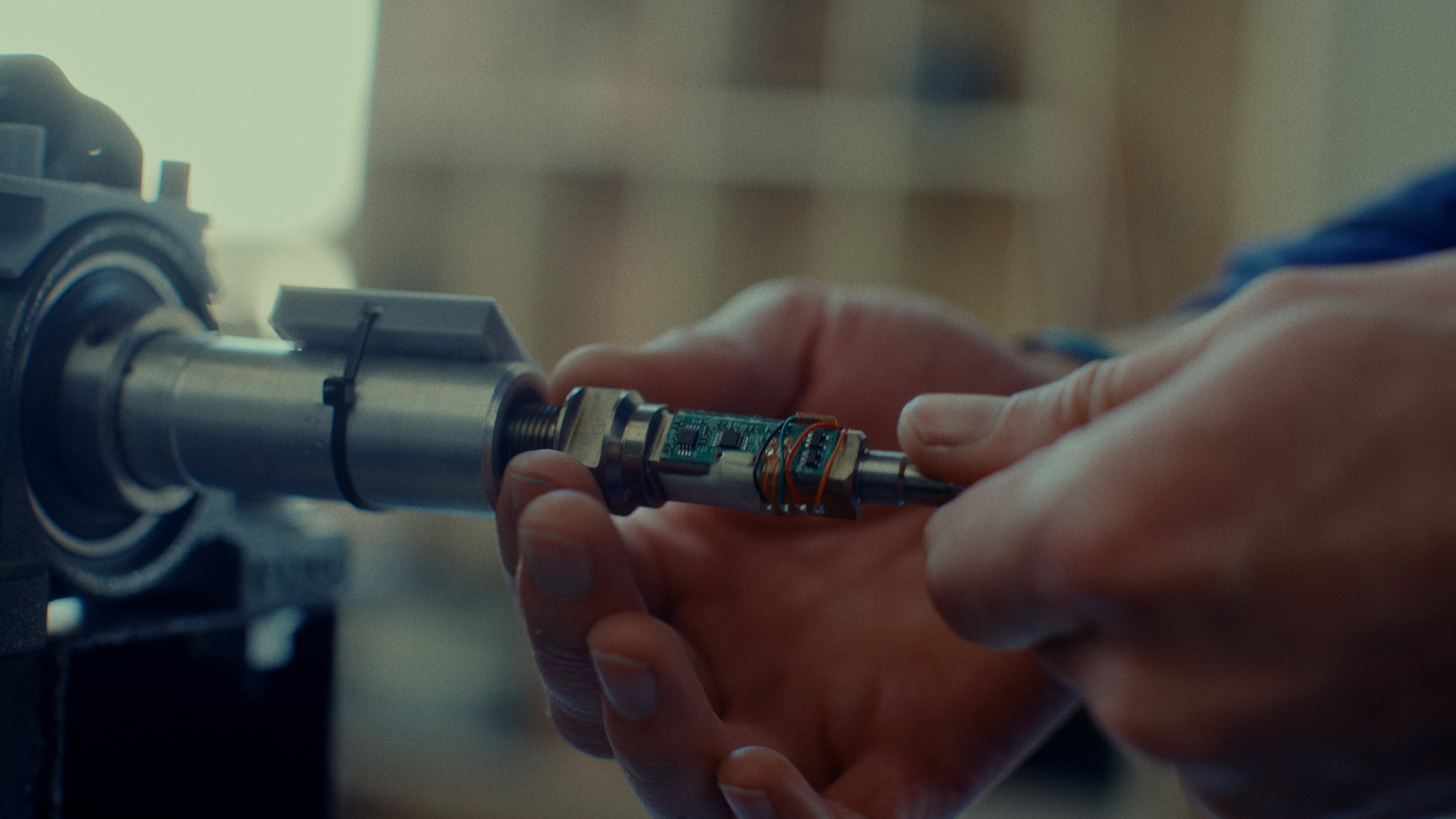
Our sensors are integrated directly into the pedal spindle — the closest point to where your effort is applied, ensuring reliable and accurate measurement. They use four strain gauges mounted in a Wheatstone bridge, sensitive enough to precisely capture the force you put down. Although invisible, this force causes a micro-deformation of the material, perfectly proportional to the effort applied.

This deformation is analysed by the pedals' microcontrollers and onboard software, then converted into power. The relationship between deformation and force is established through individual calibration carried out in our laboratory at the time of assembly. The result: power measured in real time to ±1% accuracy.

Our pedals go beyond watts — they calculate and deliver data to help you improve your performance, structure your training more effectively, or simply understand your riding better:




Want to learn more?

At CyclOptim, we focus on the data that truly matters. No frills, just the essentials — explained clearly so you can get the most out of them. With sensors placed directly in the pedals, right at the contact point, all data is measured and calculated at the source. No estimation, no guesswork.

⚡️ Power

CyclOptim pedals are equipped with force sensors and a gyroscope.

The onboard processor records the force measured by the sensors and uses the crank length entered in your GPS computer to calculate the torque applied to the crankset. It also records the instantaneous rotational speed measured by the gyroscope, then calculates power output.

This process runs dozens of times per revolution, ensuring maximum accuracy regardless of your pedalling style or chainring type — standard or oval.

🥁 Pedalling cadence

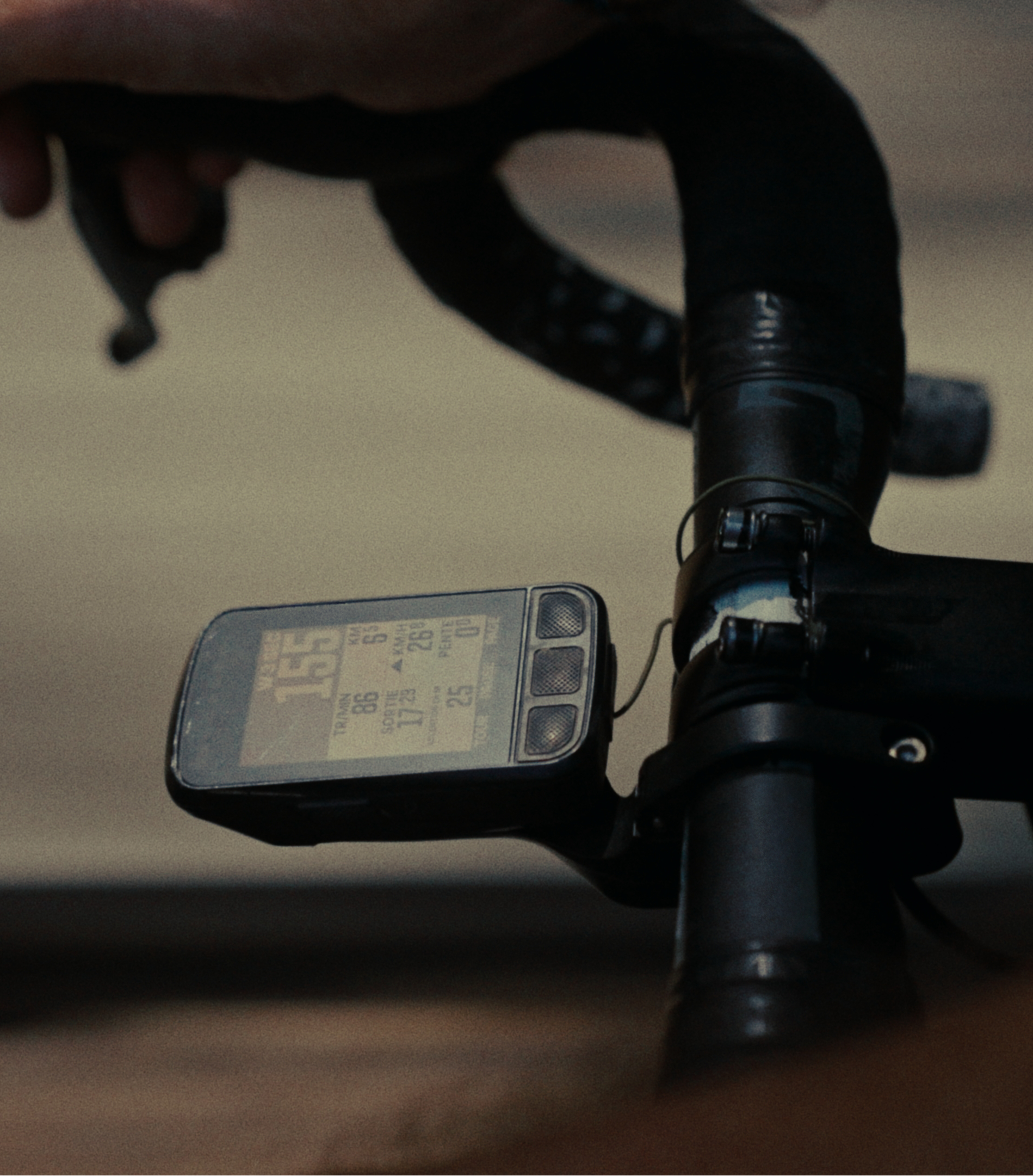
Cadence is one of the data points measured and transmitted to your GPS by your CyclOptim pedals. It refers to the rotational speed of your cranks while pedalling, displayed in rpm (revolutions per minute — the number of full crank rotations you complete each minute). This means there's no longer any need for a separate cadence sensor on your bike.

On flat terrain, a typical cadence sits between 70 and 90 rpm, promoting smooth pedalling and reducing muscular fatigue. On climbs, cadence naturally drops, generally settling between 60 and 80 rpm.

In training, cadence data helps you work on the two core aspects of pedalling: strength and fluidity. Low-cadence work — between 40 and 60 rpm — places significant demands on the muscular system, making it particularly effective for hill efforts and accelerations.

High-cadence training, between 100 and 120 rpm, shifts the load towards the cardiovascular system. This helps spare the legs while improving neuromuscular coordination and, ultimately, pedalling efficiency.

Every cyclist has their own natural cadence — their optimal rhythm. At this cadence, energy expenditure is minimised and endurance performance peaks. Over long rides, it's worth keeping an eye on your cadence: as fatigue sets in, cadence tends to drop, and with it, your overall efficiency.

⚖️ Left / Right Balance

Cyclists — and humans in general — are not perfectly symmetrical. It's entirely normal for each leg to contribute differently to the pedal stroke. Left-right balance (available on Classic versions only) lets you compare the effort produced by each leg, expressed as a percentage of total power output.

Example: if the left leg produces 120 watts and the right leg 80 watts, the cyclist is putting out 200 watts in total. Their left-right balance is: (120/(120+80)) × 100 = 60% left, (80/(120+80)) × 100 = 40% right.

There's no universally good or bad balance — however, if a regular cyclist sees an imbalance exceeding ±10% from the "perfect" 50/50 split, it may point to a bike fit issue or an underlying injury. Balance is best monitored over time: what matters is its consistency and how it evolves. If it shifts with fatigue or changes gradually, it can act as an early warning sign — prompting you to check your bike fit or rule out a developing injury.

CyclOptim Classic pedals feature sensors in both pedals, meaning the power balance data displayed are real measured values — not estimates.

🏆 Efficiency

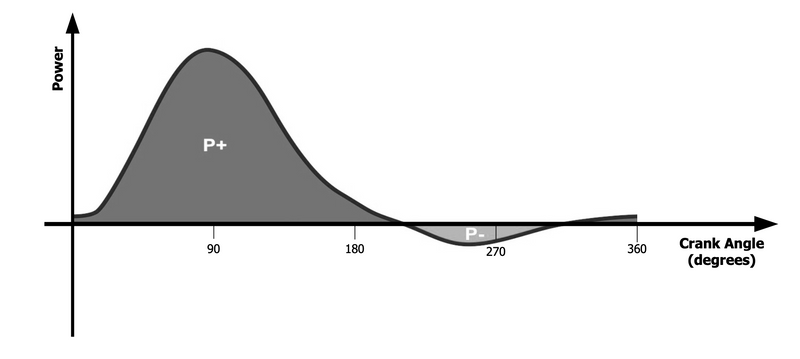
(Curve from ANT+ documentation)

Pedalling efficiency is a metric that calculates the percentage of driving torque — the "useful" force that actually propels the bike — relative to the total force applied to the crankset. During a pedal stroke, most of the useful force is generated during the downstroke. Throughout the rest of the rotation, particularly during the upstroke, the legs produce little to no useful force — and more often than not, they actively resist the crank's rotation. This braking force must be compensated by the opposite leg as it drives through its downstroke.

Efficiency = ( [(P+)+(P-)] / (P+) ) × 100

CyclOptim Classic pedals feature sensors in both pedals, giving you an independent efficiency reading for each leg. CyclOptim Lite pedals, which have a sensor in the left pedal only, measure left-leg efficiency exclusively.

As with balance, there's no target figure to chase. A natural pedalling style is often the most energy-efficient approach. That said, knowing your baseline efficiency and tracking how it varies can help flag early signs of fatigue, injury, or a bike fit that may have shifted.

📊 Indirectly derived data

Using the data from your pedals, your bike computer can calculate additional training metrics related to your effort, such as:

  • NP (Normalised Power): a weighted average power that reflects the physiological cost of your ride more accurately than a simple average, by smoothing out surges and excluding freewheeling periods.
  • IF (Intensity Factor): a metric representing the intensity of your effort. When the normalised power sustained over one hour approaches your FTP (Functional Threshold Power), the IF approaches 1 (or 100%).
  • Power zone distribution.
  • Power-to-weight ratio.

Check your GPS documentation for a full overview of the metrics it can generate from a power meter.

*Only available with Classic versions.

Durability

How can high-end sensors survive on such an exposed component? Pedals are inherently vulnerable to the elements, dirt, and impacts — which is why every aspect of our design has been engineered to handle whatever conditions you ride in.

The pedal platforms are made from a nylon and fibreglass composite. The nylon acts as a binding matrix, resisting friction, abrasion, and impacts, while the fibreglass delivers high rigidity to optimise power transfer without adding unnecessary weight. The axle is machined from aerospace-grade stainless steel. Part of the electronics are embedded directly in the axle; the remaining components are encapsulated in resin. This resin absorbs shocks, reinforces the waterproof seal, and buffers thermal fluctuations — all without adding weight.

Your pedals and sensors are waterproof to IPX7.


Simplicity

We didn't reinvent the wheel — CyclOptim pedals are compatible with any bike, from smart trainers to your little cousin's tricycle. Fitting them is just like installing any standard pedal.

Installation, pairing, and calibration take less than five minutes on your first ride. After that, you'll only need to recalibrate if you switch bikes or after a long period without use — to keep your data as accurate as ever.


Comfort

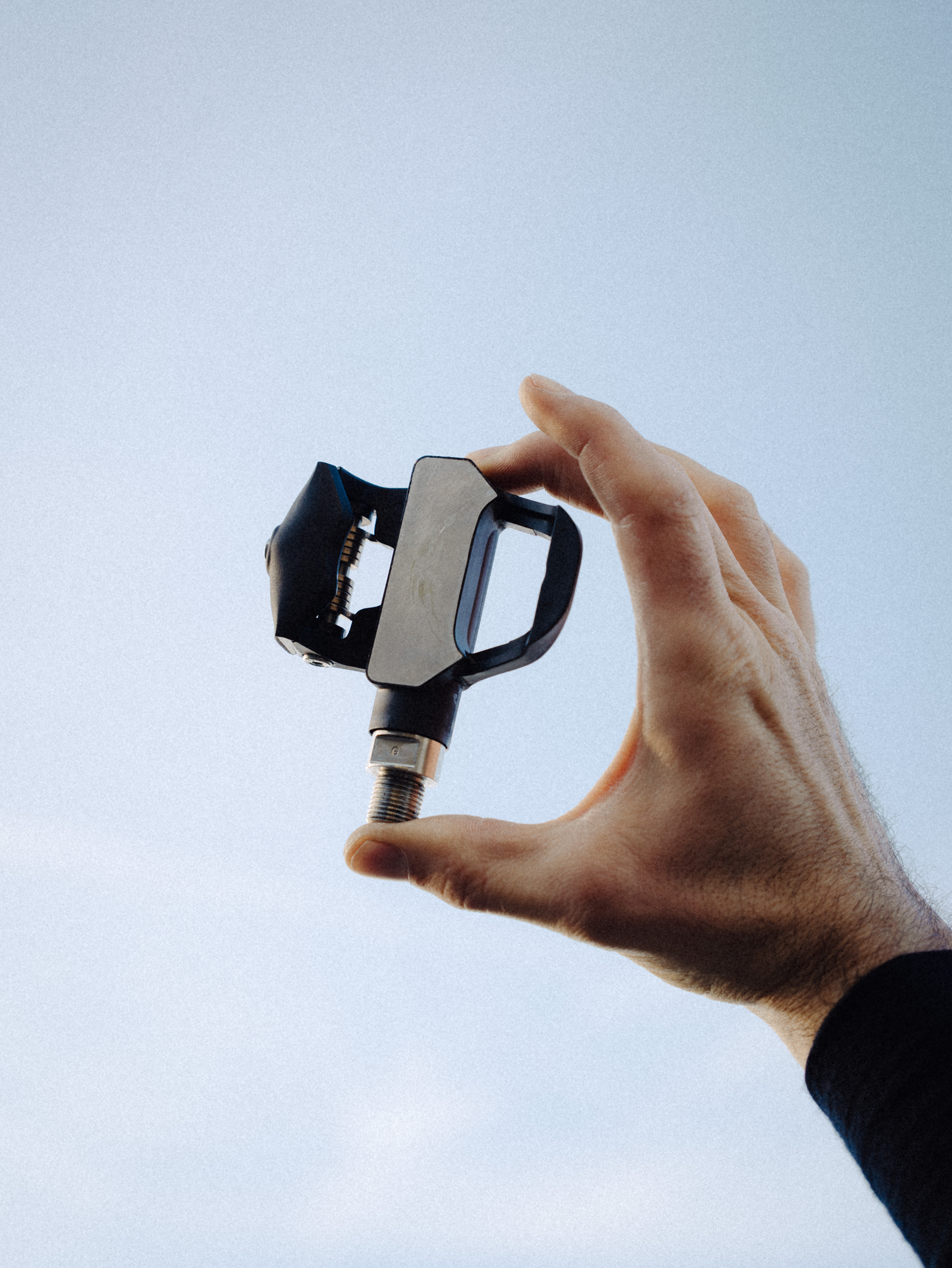
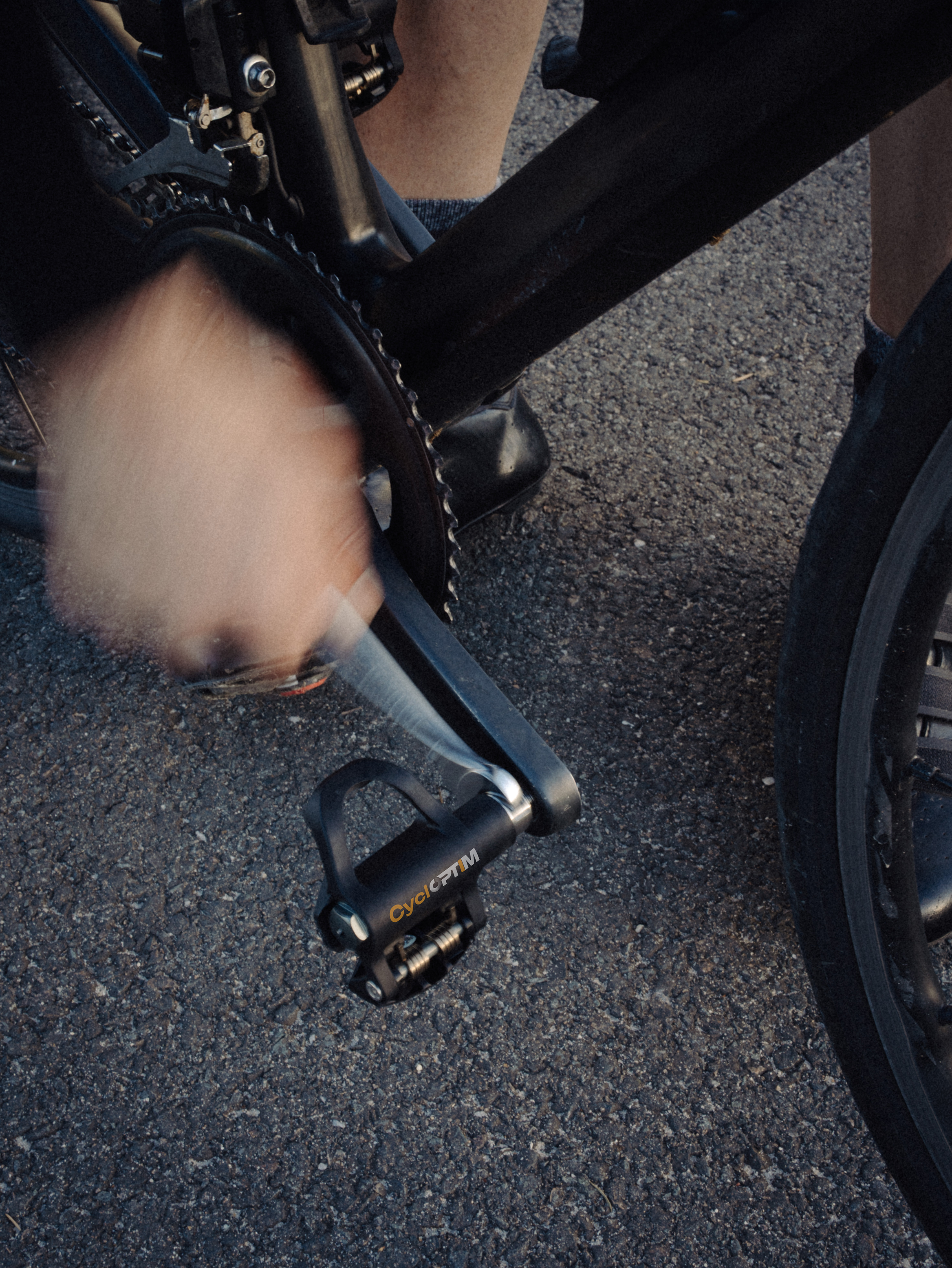
Macadam pedals feature a wide platform for a comfortable pedalling feel.

To suit every rider, our pedals offer generous float, whatever the angle of your cleats. Whether you're out for an hour or a full day in the saddle, comfort is taken care of. Release is clean and precise, and the tension adjustment screw lets you set your own release threshold. Two substantial bearings ensure smooth, stable, and long-lasting pedalling: a ball bearing for precise tracking, and a needle bearing for the rigidity needed to transfer power efficiently. The result: more comfortable, more consistent pedalling with no energy loss — even on the longest rides.


Versatility

From the very beginning, CyclOptim technology has been built around the pedal axle — a truly groundbreaking approach when we launched our Kickstarter campaign.

These engineering decisions are what allow us to offer a system that works across all disciplines: road, MTB, gravel, indoor training…


The platform changes — the pleasure, the ride, and the technology stay the same.


Practical

 
  • Compatible with any bike — one of the last truly standardised components in cycling!
  • Charge your pedals without removing them from your bike, thanks to the connector at the end of the spindle — always within reach!
  • Swap platforms in under 4 minutes. Ride road, MTB, or Gravel — whatever the day calls for.
 
Load video:

Our sensors, your rules.


CyclOptim was built on one idea: power meters that let you switch effortlessly between disciplines.

ROAD ↔️ MTB ↔️ GRAVEL ↔️ HOME TRAINER ↔️ UNICYCLE ↔️ TRICYCLE ...


Technology built into the axle. Platform change in less than 4 minutes*.

*We do it in 2:58 — but who's counting? 😎

Choose your universe

ROAD BIKE

Our MACADAM series is built for asphalt-obsessed cyclists.

Our road bike power meter pedals are compatible with all bikes, including most indoor trainers.

Discover

MTB / GRAVEL

Our MASSIF series is built to handle your most demanding rides.

This range of power meter pedals for mountain biking is also ideal for gravel and cyclocross, and is compatible with all bikes, including most indoor trainers.

Discover

COMBO PACKS

Our power meters are built to keep up with you — whatever the terrain. With our spindle-based technology, only the platforms need changing.

Explore our COMBO packs and ride at your best, wherever the road takes you.

Discover